[Expand for Full Series Overview] This is the Prologue of the series, From Discovery to Action: Shape Your Blog’s Purpose and Build a Content Plan.
Amassed from over 20 real-time notes from my blog discovery journey, this case study walks you through a 3-step iterative process to help you discover, ideate, refine, and transform your blog’s purpose into an actionable content plan, combined with practical guidance for navigating imposter syndrome, fear of uncertainty, and self-doubt to progress with clarity and confidence. Read the full series synopsis here.
All the Posts in this Series
[Current Post] Prologue: How This Blog Began: Overcoming Self-Doubt as a Blogger
Iteration 1: Find Your Blog Purpose: Explore Before You Commit to a Niche
Iteration 1.5: Refine Your Blog Purpose: 7 Factors to Maximize Feasibility
Iteration 2: Testing Feasibility with Outside Research – Assembling the Key Components to Create an Actionable Content Plan
To be Published on August 7, 2026.
This post starts you off with the right mindset by demystifying the root cause of self-sabotage when starting something new: mistaking natural human emotions for personal flaws.
In the face of resistance, especially at the start of something as mentally demanding, varied, and flexible as blogging, it’s easy to turn inward, searching for flaws to fix and reasons to blame ourselves.
We begin to believe we’re the only ones too weak to handle it as we become more painfully aware that the time it takes to fix what’s broken inside will come at the expense of the very work that gives us purpose.
Below, I’ll share my personal story of how I learned to reframe my self-sabotaging tendencies as natural human responses and transform them into tools for building solutions that lift me up in my lowest moments during my own blog purpose discovery process.
I hope this story becomes a positive reminder and a companion that lifts you up when you feel the most alone and starts you off with the right mindset in finding your own blog purpose later in this series, one that gives you the strength to push through challenges, just as it continues to do for me.
It was five years ago when I first had the idea of starting a blog. It took me three years to have the backbone to write my first blog post.
It’s a long time in the making. Long enough to lose myself and have someone abandon their faith in me.
Never once has the thought of quitting the blog faded.
But I still remain.
Is it because I am too stubborn to admit my loss?
Is it because I am a coward who’s too scared to see how my skills measure up?
Have I developed a tunnel-vision mindset because I was in too deep?
I’ve called myself out many times over.
It’s funny to see a blogger teach others how to combat negativity and build productivity systems when she still faces self-doubt and takes a millennium to even start her first blog draft.
This blog shouldn’t have made it, or so I thought.
Frankly enough, I have no regrets.
It was through years of trial and error that I gained the hard-won insights that unveiled the self-sabotaging beliefs, hidden challenges, and overlooked fallacies that new bloggers often ignore, underestimate, or feel powerless to solve.
When it comes to long-term goals, we’re limited to our human frailties and the clarity of our abstract, intangible ambitions.
It’s only when I choose to appreciate, accept, work with, and live with my human frailties that I can turn failures into opportunities for growth during the production of this blog. To me, it has been a silent tug-of-war between my resolve and insecurities.
I understand that few would have the time or inclination to walk the path I chose, but blogging is often a solitary craft that requires significant mental energy. The struggles of a new project can easily be magnified into personal flaws when, in truth, they are signs that we should take care of the human in us, which is entirely solvable.
So I am here as a comrade and a living, evolving case study that helps you navigate the uncertain, often messy path of building something meaningful from scratch. How to turn your personal story into the thing that makes people care.
This is a version of my blog’s purpose, one that’s adaptable to one of the many interdisciplinary topics I am exploring, including blogging itself. A steady purpose that drives me on, despite the uncertainty and the ever-present temptation to give up.
The longer it takes for us to achieve our goal, the more variable the outcome.
It’s only when we put ourselves into our plans that we can negate part of the uncertainty by relying on the predictability of our habits, tendencies, and inclinations.
Leading to the purpose of this blog: To guide content creators in overcoming hesitation and self-doubt by using my firsthand insights as their initial launch pad to remold insecurities into personalized solutions that work with their current habits, tendencies, and inclinations so creators can naturally ease into their goals without waiting to feel ‘ready’ or ‘enough’ to start.
“Take care of the human in us.” The essence behind this blog.
Here’s a short story about how I’ve learned to work with my hard-to-abandon trait of self-criticism as a proud perfectionist since childhood—a heartfelt struggle that inspired me to warn, guide, and remind myself and others who often trip over their own feet on the way to where they want to be.
Perhaps it’s because I have been managing my family’s finances, medical, and travel since I was a kid; I understand that every decision I make and every word I say carries considerable weight as the only English speaker in my family.
If I ever make a mistake, it will be big.
I trained myself to be impeccable, to always be better. Over time, memories of my wins have been filled by the more urgent need to adopt others’ strengths in hopes of patching and correcting my own flaws. My wins look too small compared to the flaws I magnified.
I was just doing what I could, like everyone else; it’s nothing noteworthy.
I was fortunate enough to meet classmates, professors, and friends who are charismatic, partly due to their abundant interests, hobbies, and values that made them confident in what they want to do in their lives. Some may not have the most impressive academics, but they shine beyond that.
For the first time, I want to know who I am. What will make me shine like them?
This set off a chain of exploratory personal projects while I was busy transitioning into the remote workforce during COVID, where my weaknesses were revealed fast, as the need for increased responsibility, quality, and self-directed thinking quickly amped up.
I did what I’ve always done: I looked for signs of strength in others, patching myself up with any of the “best” tips that made others succeed at what they do.
In the course of two years, I’ve spent more money and time than I should on productivity tools, strategies, and advice that were all supposedly going to “change my life” for the better. But all it added was unnecessary bloatware and ever-increasing things to learn that stifle my focus and stall my progress on things that really matter.
Why does it work for others but not me? How can I get rid of the issue that is myself?
The more I fail, the more I fall deeper into the self-doubt swamp, the more I grasp in search of ways to survive, and the more I want to believe that this will not be the end of me.
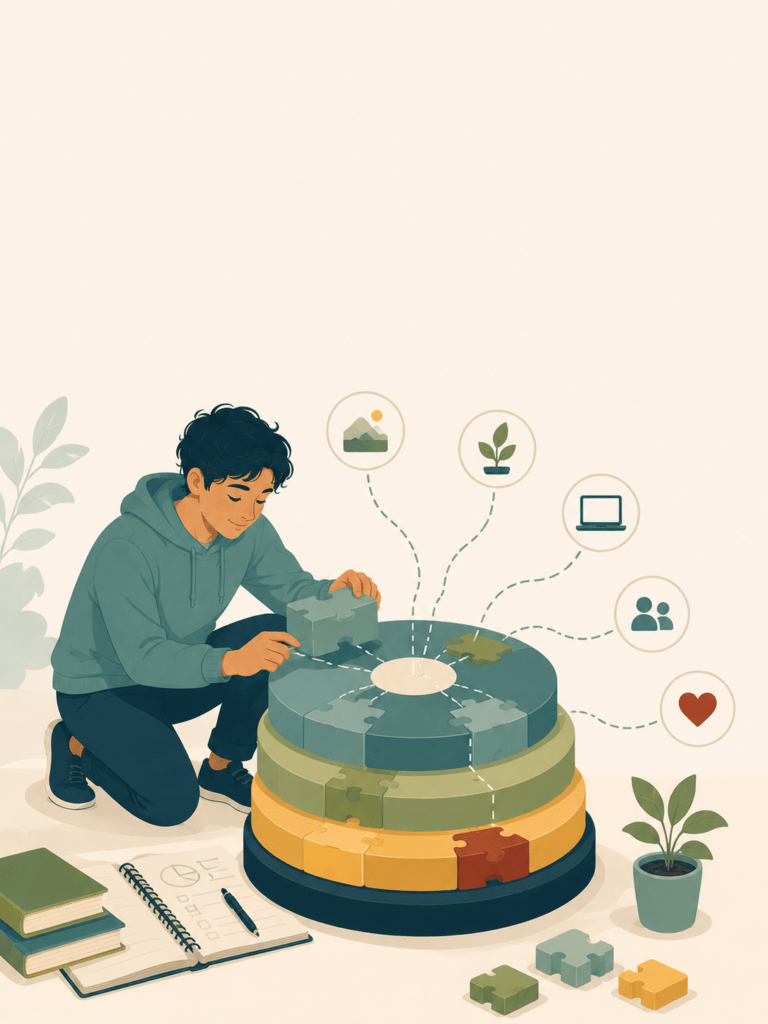
As I stood witness against the slander I made against myself, I realized that my fault lies in never seeing myself as worthy. I should be the “fit-defining” variable, my own metric, to choose from the pool of great solutions that the world has to offer.
How can I be a part of my own solution?
Unbeknownst to me, I had been part of my own solution long before I realized it.
When I first set out to understand who I was, I started a business to give myself a chance to explore what I should do in life. It led me to 3D design.
During the COVID lockdown, the new meaning of work-life balance made me rethink the functionality and energy of my living space. It was a time of confined unrest, and I wished to transfer this treasure found in solitude with others who felt isolated, yet whose love for life and dreams hadn’t slowed. It’s when I first had the thought to blog.
But I hesitated.
Becoming a blogger felt foreign and intimidating because I would be skipping the prerequisites of being a regular on social media. Never had I voluntarily put myself in the spotlight.
What I needed was a project, an alternate buffer, to overcome this long-standing resistance that could transform my amplified anxiety into earned confidence backed by real results. I became a top-rated seller on Poshmark, trying my hand at building a brand for the first time.
When I returned to the idea of blogging, I quickly realized it was of a different caliber than any project I had taken on before.
One moment, I was looking inward, trying to shape raw thoughts into words. The next, I was looking outward, questioning whether my ideas were needed, and working overtime to bridge the gaps between branding, design, content, and marketing.
I’ve come to an undeniable truth: building personalized systems that can hold our ground during our most fragile moments is non-negotiable.
I never wanted this blog to become just another abstract theory — something written by a human, but one that loses the messy, in-the-moment reality that makes the inevitable struggles we face feel normal, valid, and solvable.
My goal has always been the opposite: to ground every insight in real, lived experience so that whatever strategies you choose to adopt are always usable, honest, and human.
As human as a blog can be, Nivationist is guided by core values. It is a living, evolving case study shaped by hundreds, and counting, self-reflective notes captured in the moment.
Discover the four core values of Nivationist, the essential touchpoints that “humanize” every post I’ve written.
Coming Next: Finding Your Blog Purpose
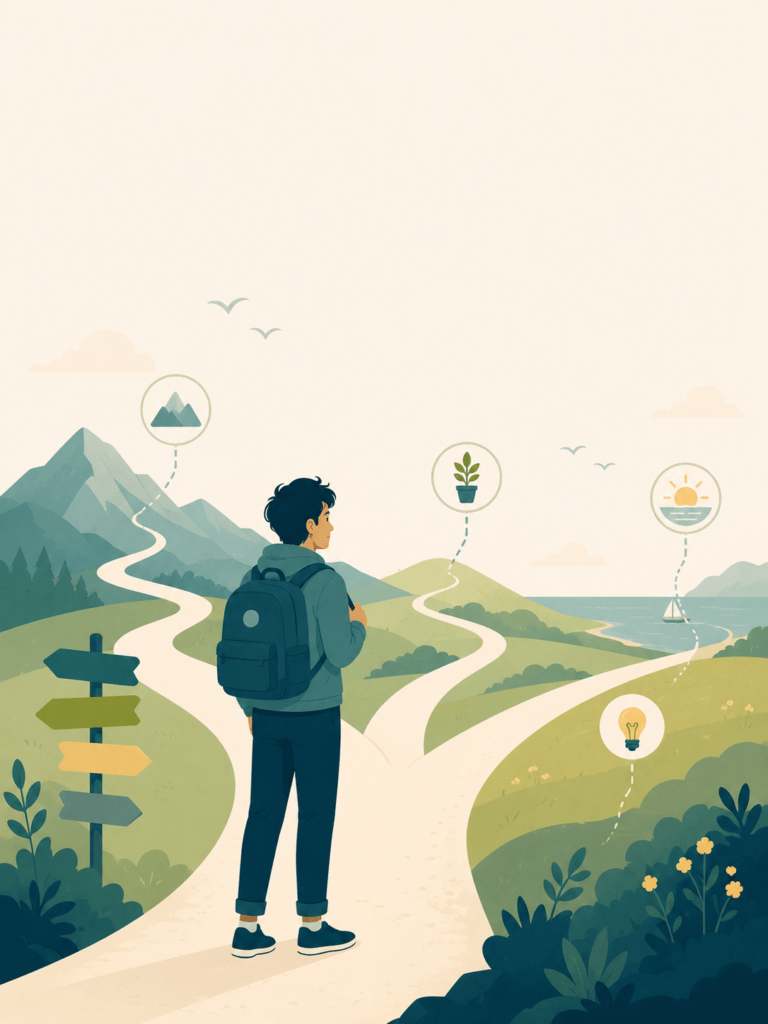
For any blogger aiming to turn their passion into a career, “finding your purpose” is unavoidable. It’s the foundation of why your blog should exist, why your audience should care, and why you should continue blogging when you’re already busy with life itself.
I used to think that the advice, “find your purpose,” was incredibly elusive. What does that even mean? How are you supposed to find something so abstract, inconclusive, and intangible?
It always felt out of reach. It’s easier to complete measurable tasks with clear criteria for success than to chase after a grand purpose that sounds impressive on paper but feels hollow to me.
Ironically, it was through the act of doing that I discovered my purpose. It became the force that redirected me back to my goal during the lowest points of my human frailty.
The more abstract an idea is, the greater the need for a demonstration. I’ll be showing how I’ve uncovered Nivationist’s purpose—how it has evolved through different iterations, and how I translate it into actionable strategies that highlight my competitive edge and support the consistency of my voice and brand.
Leading up to the case study series, From Discovery to Action: A 3-Step Case Study to Shape Your Blog’s Purpose and Build a Content Plan from Scratch.
Through this case study series, you’ll
- Avoid chasing short-lived goals: Defining a purpose without clarity can feel abstract. When paired with long-term ambitions, it may lead to chasing a “false positive,” something that feels right in the moment but lacks lasting alignment or impact.
- Prevent scattered focus and unnecessary overwhelm: Without a defined purpose, your attention gets pulled in too many directions. The result? Broader uncertainty, more distractions, and difficulty standing out in a saturated blogging landscape.
- Avoid living someone else’s story: Without crafting a purpose that’s tailored to your needs, values, and habits, your purpose will instead be shaped by others. This leads to misalignment, burnout, and a creeping sense of impostor syndrome as you pursue goals that were never truly your own.
- Protect your energy and self-worth: Blogging demands significant mental energy, often with little or no immediate financial return in the beginning. Without a clear purpose that’s meaningful to you, it becomes harder to justify the effort. This leads to frustration, burnout, and the self-deprecating belief that you’re not “cut out” to be a blogger when the real issue could be a misaligned purpose.
- Balance structure with flexibility: A purpose that’s too narrowly defined can box you in. Over time, as your life circumstances and career goals evolve, a rigid purpose may limit your ability to adapt, grow, or shift direction.
- Support sustainable growth: Knowing how to define your purpose, not just what it is, gives you a foundation that’s focused yet flexible, allowing your blog to grow with you rather than hold you back.
In the next post of this case study series,“Iteration 1: Find Your Blog Purpose: Explore Before You Commit to a Niche,” you will learn how to explore, discover, and create the first iteration of your blog’s purpose along with an excerpt demonstration of this very process to help you break free from this stage where we feel the most directionless, vague, and unready.
Kind Note: This series is a summarization of my insights gained from the analysis of my own self-reflective notes, marketing expertise, and experience that is subjective but serves as a critical launchpad that helps you get started and a compass to redirect you back on track when needed. Use this series as part of your solution, all of it, or none at all. Feel free to go off script to follow your heart, which aligns with the self-led nature of defining a blog’s purpose.
You can take control of your own pace while navigating through this blog series and fast-forward to get a preview of the other blogs in this series to judge if this series truly works for you.
Expand the links below to see where this journey leads next.
🔗 Explore the full series roadmap here
[Expand to View] From Discovery to Action: Shape Your Blog’s Purpose and Build a Content Plan.
All the Posts in this Series
[This Post] Prologue: How This Blog Began: Overcoming Self-Doubt as a Blogger
[Next Post] Iteration 1: Find Your Blog Purpose: Explore Before You Commit to a Niche
Iteration 1.5: Refine Your Blog Purpose: 7 Factors to Maximize Feasibility
Iteration 2: Testing Feasibility with Outside Research – Assembling the Key Components to Create an Actionable Content Plan
To be Published on August 7, 2026.